 admin
admin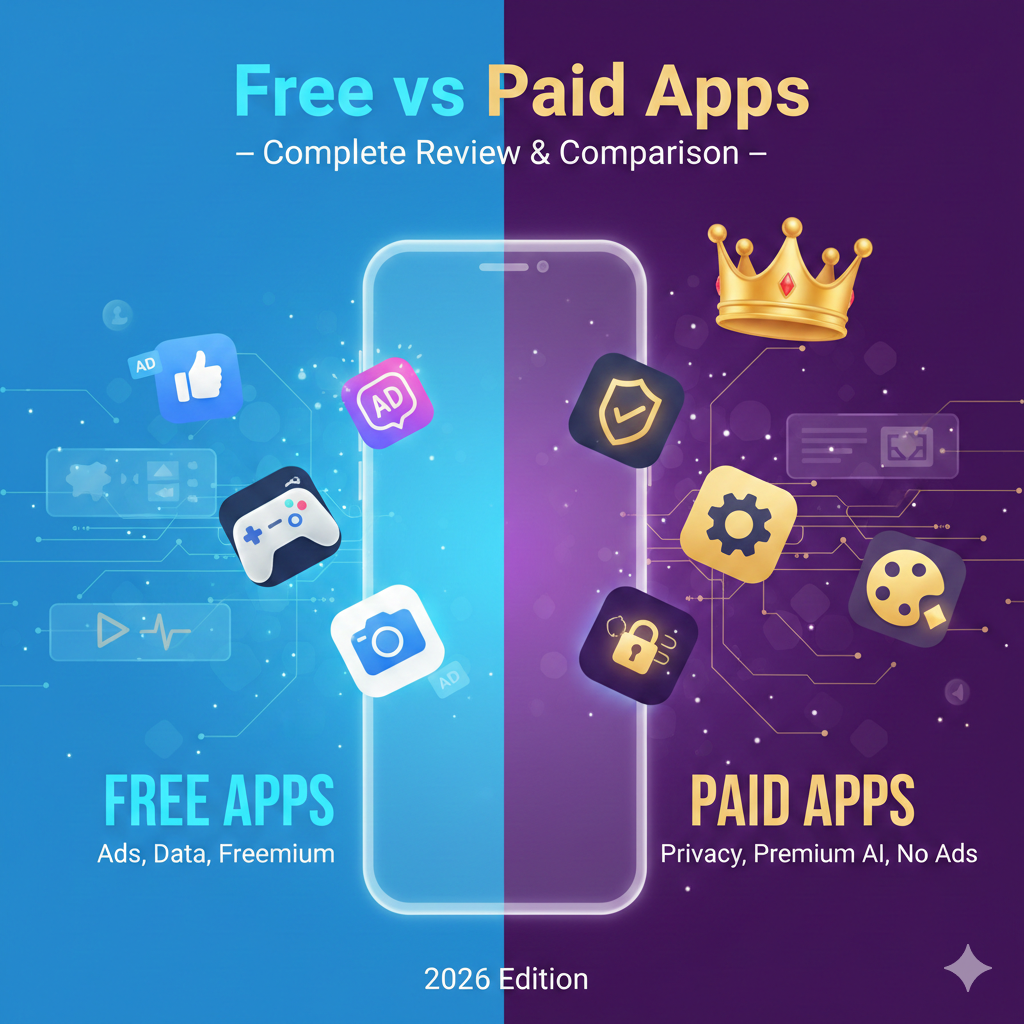
In the rapidly evolving digital landscape of 2026, choosing between Free vs Paid Apps has become more than just a matter of a few dollars; it’s about privacy, performance, and long-term value. With the rise of “subscription fatigue” and advanced AI integration, users are recalculating the true cost of their downloads. This complete review explores the core differences to help you decide which model fits your digital lifestyle.
Free vs Paid Apps: Understanding the core differences
The true cost of “Free” in 2026
While free apps don’t require an upfront payment, they are rarely truly “free.” In 2026, these apps primarily monetize through in-app advertising and data monetization. Users often pay with their attention, viewing rewarded video ads or banner ads in exchange for service. For many, the free app download is a gateway to the freemium model, where basic features are accessible, but the best tools remain locked.
Why paid apps are making a comeback
The appeal of paid apps—specifically one-time purchase apps—has surged as a response to complex subscription models. These apps offer a “pay once, own forever” philosophy that eliminates subscription fatigue. When you choose premium apps, you aren’t just buying software; you are buying a cleaner user experience free from trackers and interruptions.
The psychological impact of app pricing
There is a distinct psychological difference in how we perceive Free vs Paid Apps. We tend to have lower expectations for free software, often tolerating bugs or intrusive native ads. Conversely, premium software sets a high bar for app performance and customer support. In 2026, users are increasingly willing to invest in paid versions of productivity and health tools where reliability is non-negotiable.
Free vs Paid Apps: Evaluating features and user experience
Privacy and data security benchmarks
One of the most significant arguments for Paid vs Free apps in 2026 is data privacy. Free apps often require broad permissions to track user behavior, fueling their monetization strategies. Paid apps, however, typically follow a privacy-first monetization approach. Since their revenue comes directly from the user, they have less incentive to sell personal data to third-party advertisers.
Performance and ad-free browsing
The user experience in free versions is frequently hampered by ad-supported versions that drain battery life and consume mobile data. In contrast, paid apps are optimized for speed and efficiency. By removing the code required to serve in-app ads, premium apps deliver faster load times and a “calmer” interface, which has become a major selling point in 2026’s noisy digital world.
Access to advanced AI features
With AI becoming the backbone of mobile technology, the gap between Free vs Paid Apps is widening. Free apps might offer basic AI assistance, but premium AI features—such as high-speed processing and offline LLM capabilities—are usually reserved for paid subscribers or those who make in-app purchases. If you need cutting-edge technology, the paid model is often the only way to access it.
Free vs Paid Apps: Which one should you choose?
Best use cases for free apps
Free apps remain the king of social media, casual gaming, and “discovery” tools. If you are looking for mobile games to pass the time or a tool you only need once, the free app model is ideal. Many developers also offer a free trial or a freemium version, allowing you to test the app functionality before committing any financial resources.
When to invest in paid apps
For productivity tools, professional creative suites, and specialized health trackers, paid apps are the superior choice. In 2026, “Super-apps” and subscription-based apps provide ongoing value through regular updates and cloud syncing. If an app is central to your daily workflow or contains sensitive personal health data, the security and stability of a paid version are worth the investment.+1
The rise of hybrid monetization models
The line between Free vs Paid Apps is blurring thanks to hybrid monetization. Many of today’s most successful platforms use a mix of subscriptions, one-time perks, and ad-free tiers. This “optionality” allows users to start for free and slowly upgrade as they find more value, making the transition from a casual user to a premium subscriber seamless and transparent.